Field document · Essay · 150 yr range
The best product demos of all time
21 demonstrations that made the future feel inevitable.
Criteria stamped below. Image plates carry their own credit line. Not a product claim.
There is a moment in every great product demonstration when something changes in the audience.
Something they thought was impossible becomes possible. Something complicated becomes effortless. Something they never knew they needed suddenly becomes something they cannot imagine living without.
In 1876, people heard a human voice transmitted through a wire. In 1908, they watched a man fly through the air in a machine he controlled. In 2007, they watched Steve Jobs manipulate a computer screen with his fingers.
The best product demonstrations don't just introduce products. They change what people believe is possible.
This is my ranking of the greatest product demonstrations of the last 150 years, judged by four criteria:
Some of these demonstrations were carefully choreographed stage presentations. Others were simple scientific experiments, live events, or products that people could try for themselves.
What they share is a remarkable ability to make an idea tangible.
Douglas Engelbart — The Mother of All Demos (1968)
Plate 01 / Ref image
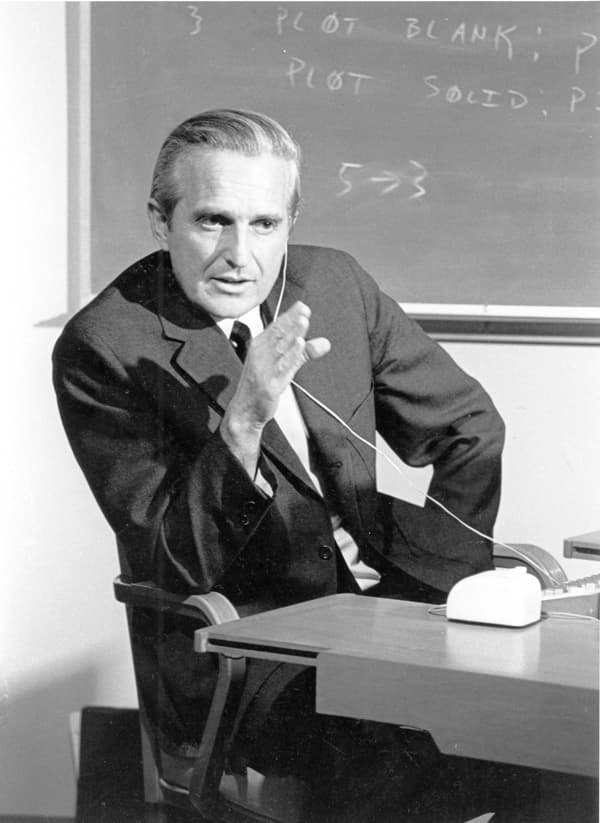
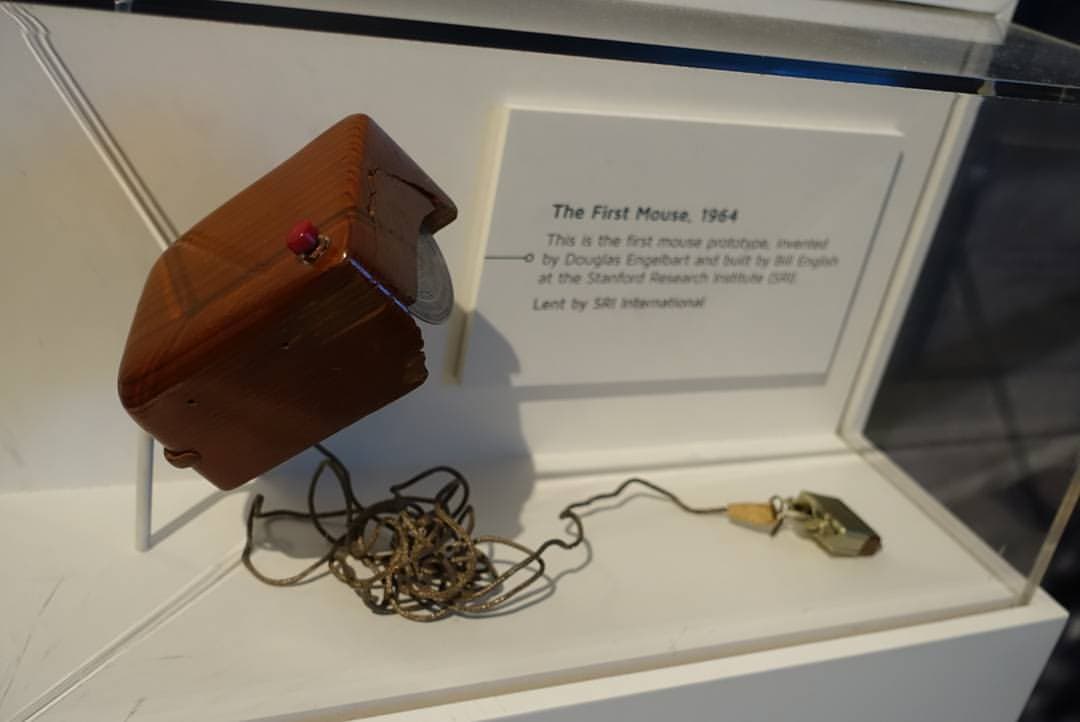
In December 1968, Douglas Engelbart stood before an audience of computer professionals in San Francisco and demonstrated a computer system that seemed to come from decades in the future.
He used a mouse to move a cursor. He edited text directly on a screen. He navigated linked information, arranged different views of documents, and collaborated with a colleague remotely using live video.
This was 1968.
Computers were still largely expensive machines operated through punched cards, terminals, and specialized commands.
Engelbart wasn't showing a faster version of the existing computer. He was showing an entirely different relationship between humans and machines.
Much of what we now recognize as everyday personal computing was visible in that one presentation.
The moment: A computer stopped looking like an industrial calculator and started looking like an extension of human intelligence.
More than any other demonstration on this list, Engelbart showed an entire future before the world was ready for it.
Steve Jobs — The iPhone (2007)
Plate 02 / Ref image
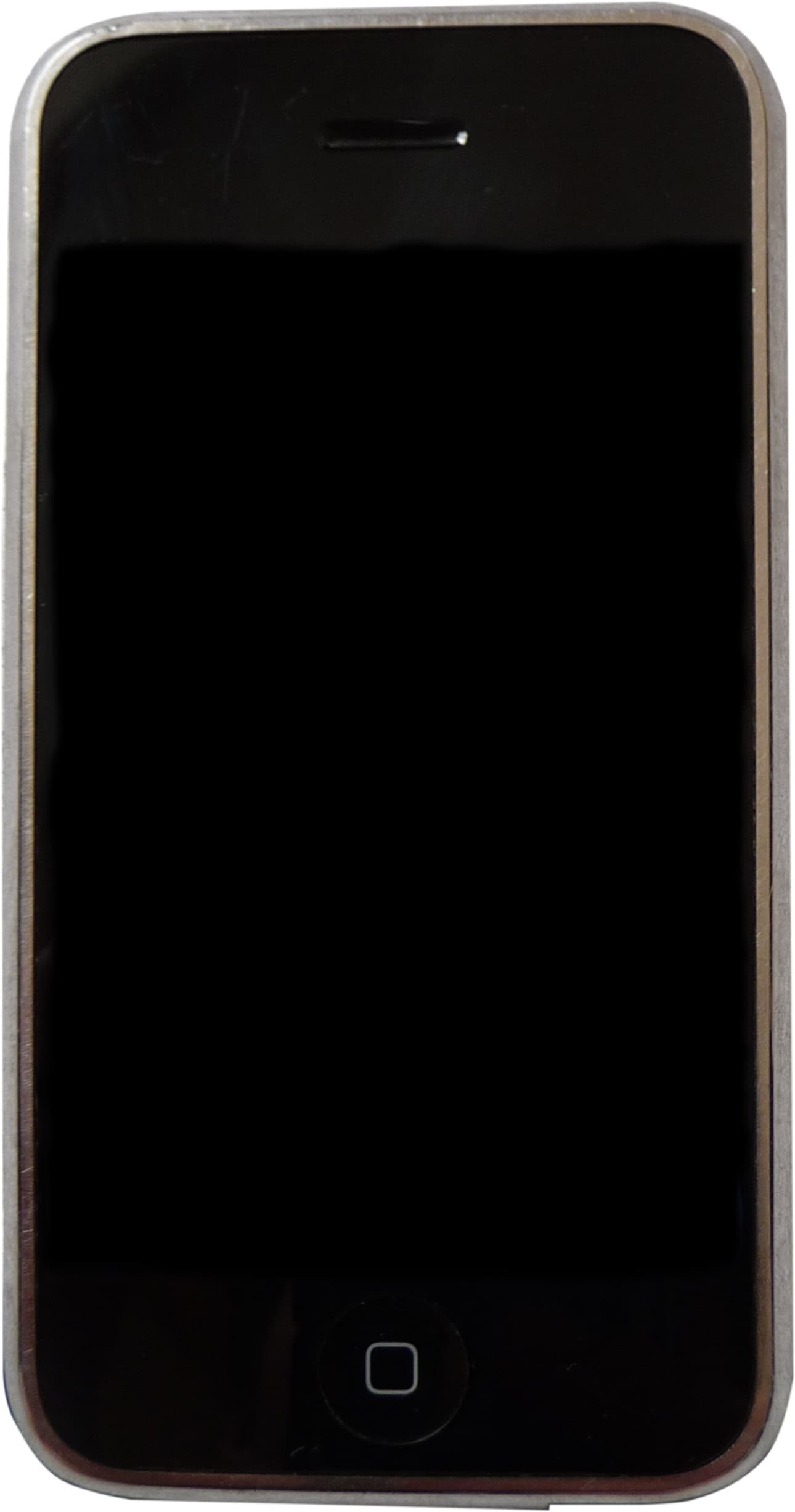
On January 9, 2007, Steve Jobs announced that Apple was introducing three revolutionary products: a widescreen iPod, a mobile phone, and an Internet communicator.
Then he revealed that they were all the same device.
The iPhone.
But the announcement wasn't the genius of the demonstration. What came next was.
Jobs scrolled through lists by flicking his finger. He pinched photographs to zoom. He rotated images, browsed websites, used Google Maps, and made phone calls with an interface unlike anything most people had experienced.
Each interaction made conventional smartphones, with their little keyboards and complicated menus, look increasingly outdated.
Jobs understood something fundamental about product demonstrations: specifications aren't nearly as persuasive as seeing something work.
The moment: Watching someone control a sophisticated computer with nothing but their fingers.
This may be the best-executed commercial product demonstration in history.
Alexander Graham Bell — The Telephone (1876)
Plate 03 / Ref image
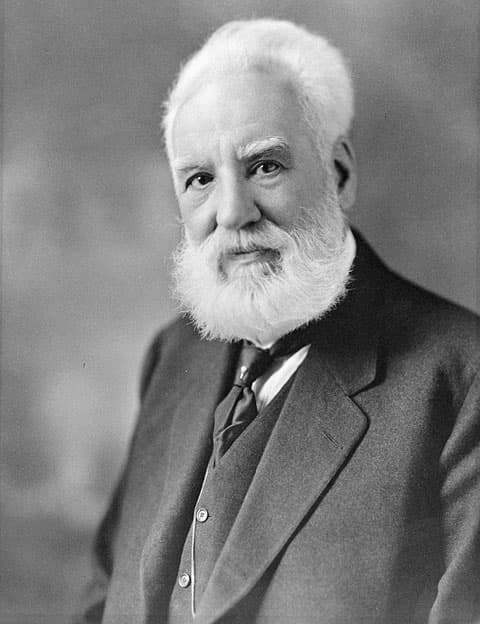
At Philadelphia's Centennial Exhibition in 1876, Alexander Graham Bell demonstrated something extraordinary.
He spoke through an electrical device, and someone at another location could hear his voice.
Today, that seems unremarkable. At the time, it fundamentally changed the perceived limits of human communication.
The telegraph had already demonstrated that messages could travel through wires. But those messages required encoding and decoding.
The telephone transmitted speech itself.
No specialized operator needed to translate it. No code needed to be learned.
The moment: A person heard another human being speak through an electrical wire.
Few products have ever had a simpler or more powerful demonstration.
The demonstration was the value proposition.
Thomas Edison — Electric Lighting at Menlo Park (1879)
Plate 04 / Ref image
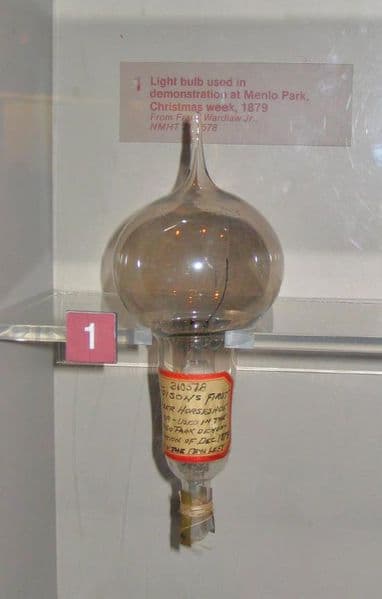
In December 1879, Thomas Edison invited visitors to Menlo Park, New Jersey, to witness his electric-lighting system.
It wasn't simply the demonstration of a glowing light bulb. Electric lighting already existed in other forms.
Edison showed an interconnected system capable of illuminating buildings and outdoor spaces using practical incandescent lamps.
People accustomed to candles, oil lamps, and gas lighting could walk through an environment illuminated by electricity.
The significance wasn't just that a new kind of light existed. It was that entire homes, businesses, and cities could someday operate differently.
The moment: Darkness could be defeated at the flip of a switch, without a flame.
Instead of explaining what an electrified future would look like, Edison illuminated one.
The Wright Brothers — Public Flight Demonstrations (1908)
Plate 05 / Ref image
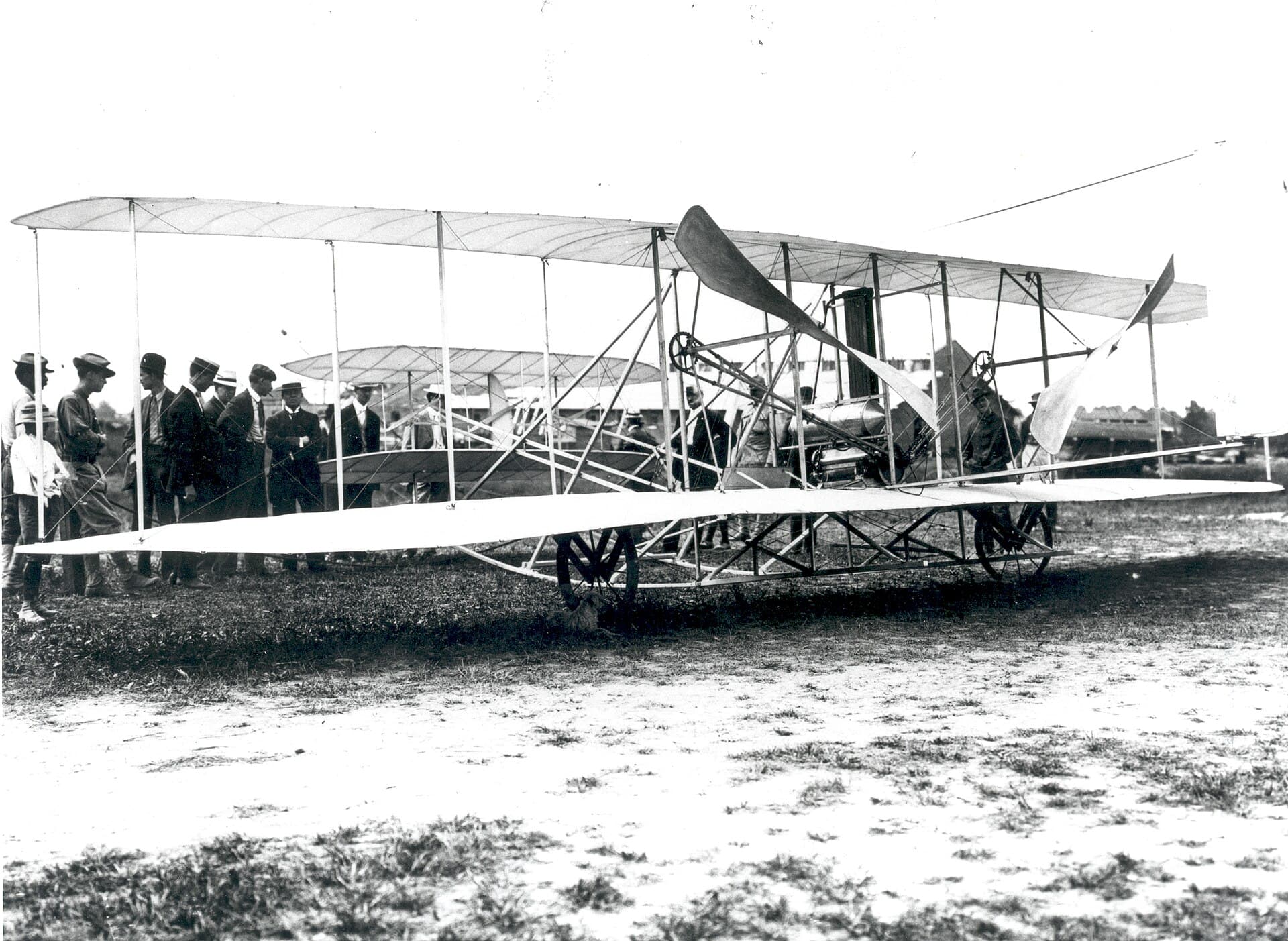
The Wright brothers achieved powered, controlled flight in 1903.
But relatively few people witnessed those early flights, and many remained skeptical of the brothers' claims.
That changed dramatically in 1908.
At Le Mans, France, Wilbur Wright demonstrated his airplane before observers who had reason to doubt whether the Americans had accomplished what they claimed.
He didn't merely launch himself into the air for a few seconds.
He flew controlled turns, circled the field, remained airborne, and landed.
The demonstration proved not just that a powered machine could leave the ground, but that a human could reliably control it.
The moment: People watched a man fly, turn, and land under his own control.
The skepticism surrounding the Wrights gave way to astonishment.
This is one of history's clearest examples of a product demonstration accomplishing what years of explanation could not.
Thomas Edison — The Phonograph (1877–1878)
Plate 06 / Ref image
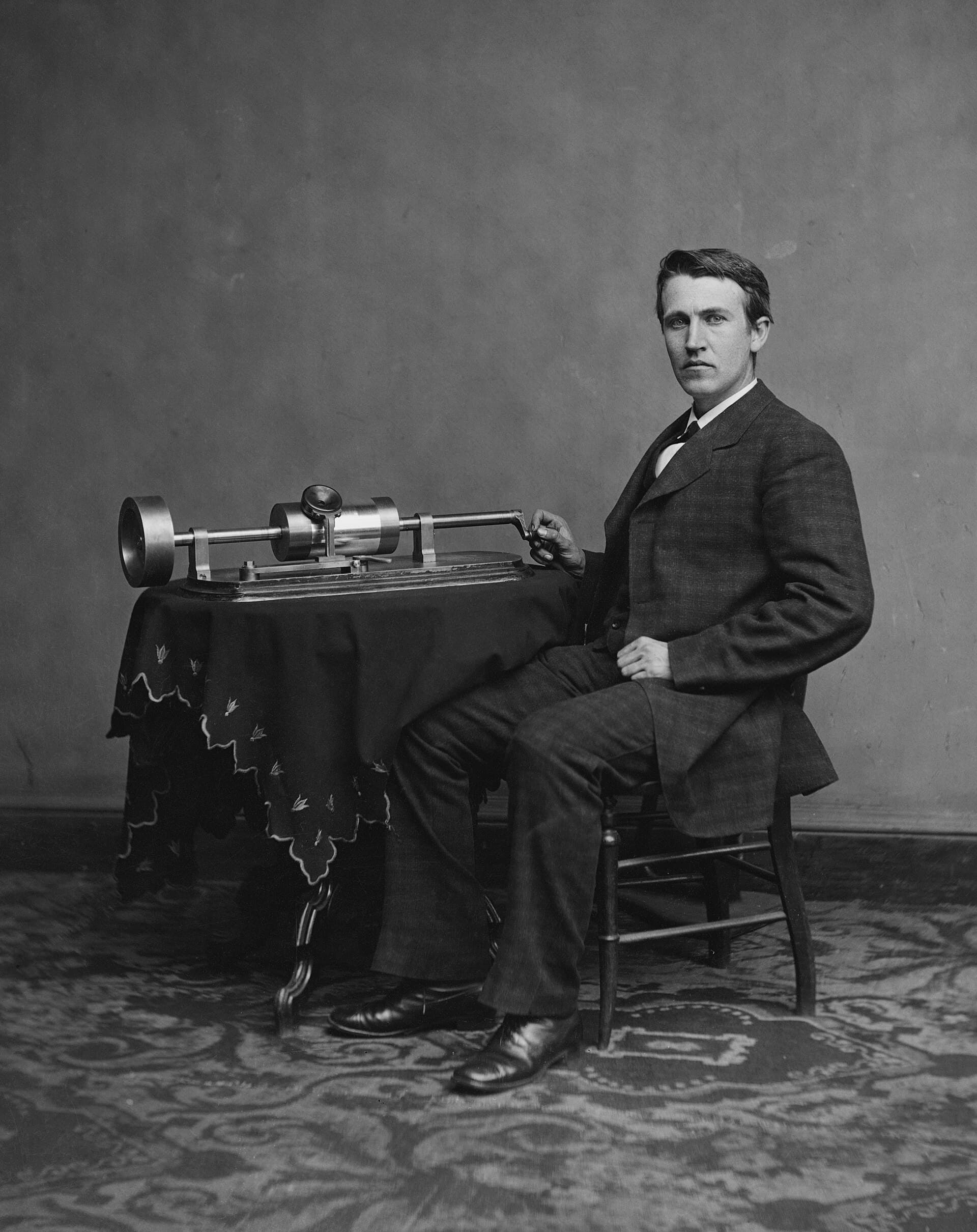
Imagine living in a world where human speech disappears the instant it is spoken.
Then someone introduces a machine that can capture a voice and play it back.
That was the phonograph.
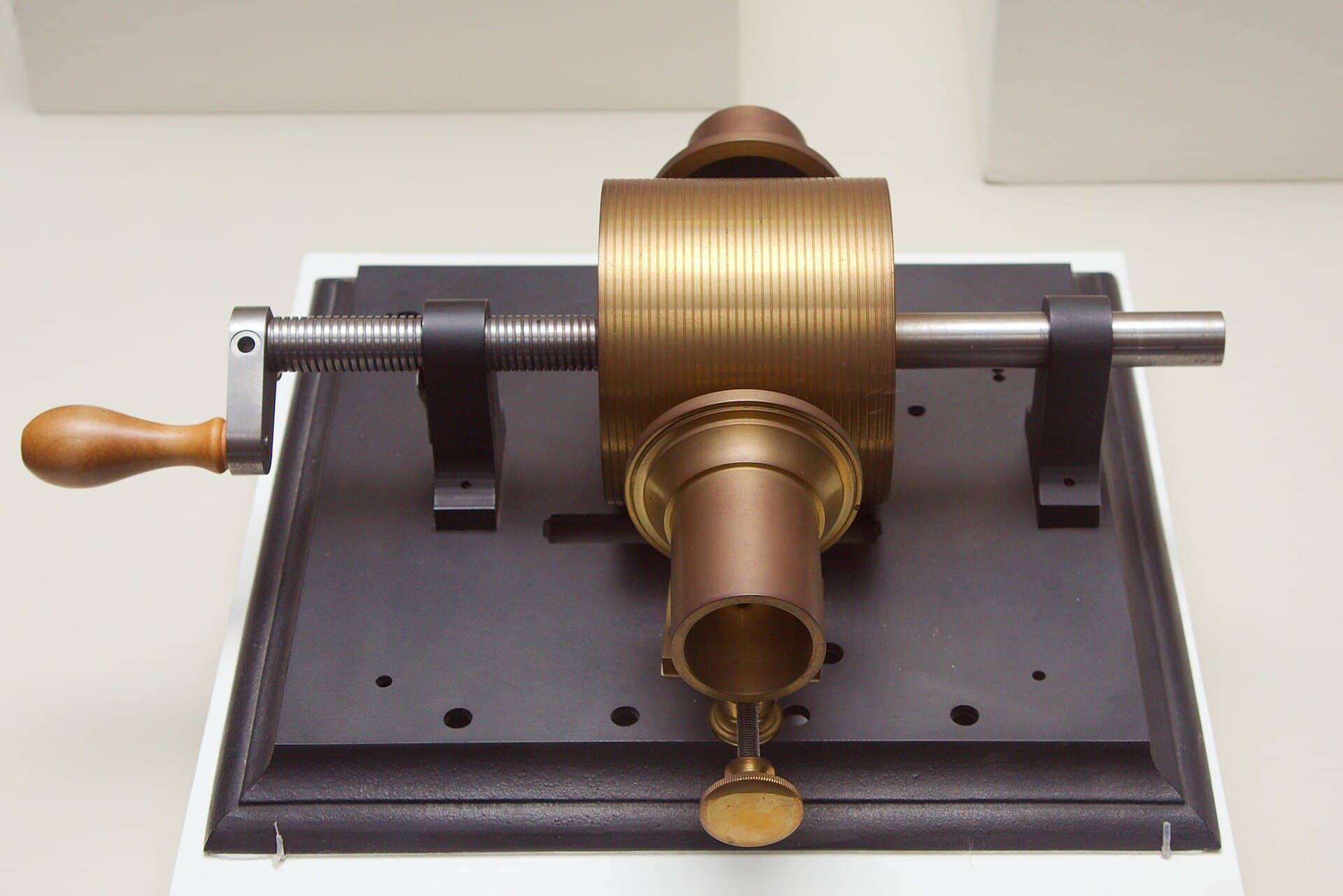
Edison's early phonograph recorded sound through vibrations engraved into a rotating cylinder covered with tinfoil.
When played back, those grooves reproduced the recorded sound.
For the first time, ordinary people could encounter a machine that remembered and repeated human speech.
The moment: A machine spoke with the voice of someone who was no longer speaking.
The phonograph demonstrated a profound new possibility: experiences previously confined to a moment in time could be preserved.
The Lumière Brothers — The Cinématographe (1895)
Plate 07 / Ref image
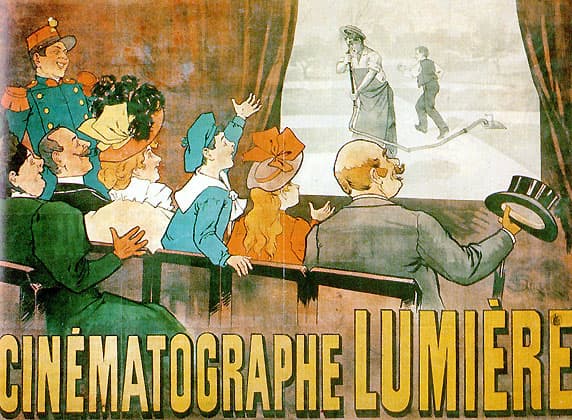
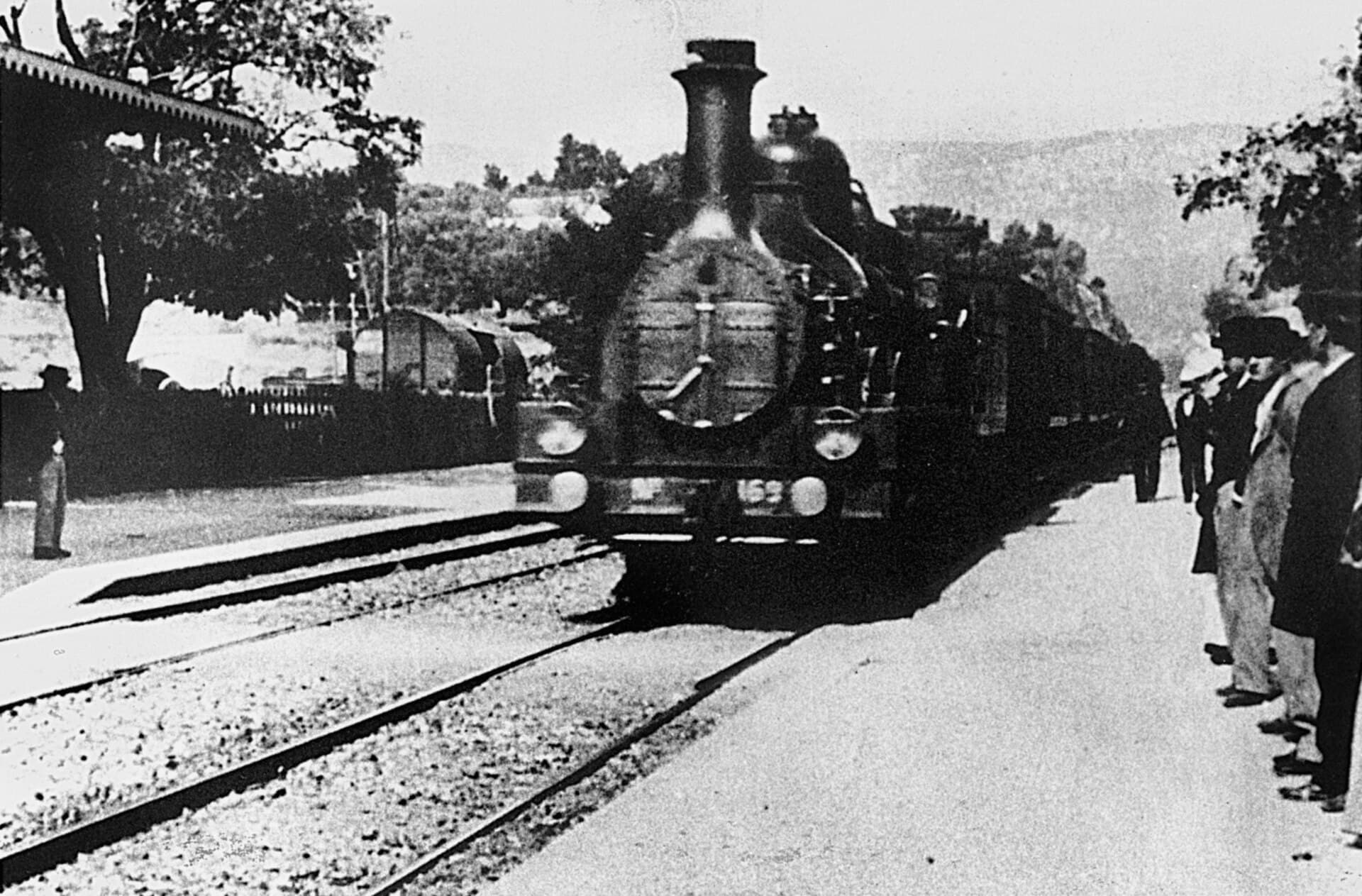
In 1895, Auguste and Louis Lumière demonstrated projected motion pictures, including at their famous paid public screenings in Paris that December.
Photography had already transformed the world by allowing people to capture moments.
The Cinématographe brought those moments to life.
Workers walked out of a factory. People moved through streets. Everyday scenes unfolded in front of an audience.
What made the experience astonishing wasn't simply the content of the films.
It was seeing photographs move.
The moment: A still image became a living moment that could be replayed.
The demonstrations helped establish motion pictures as an entirely new form of mass entertainment.
John Logie Baird — Television (1926)
Plate 08 / Ref image
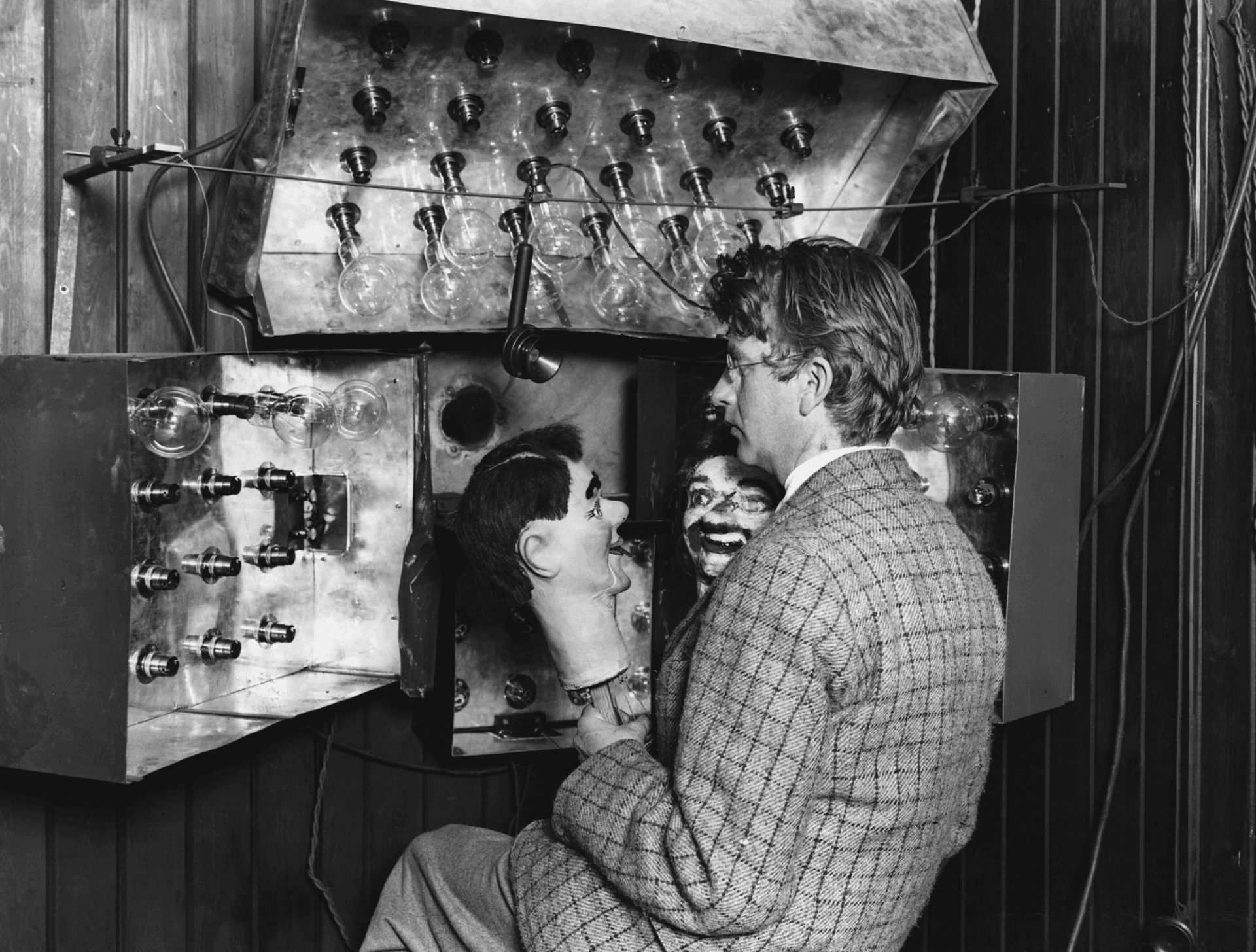
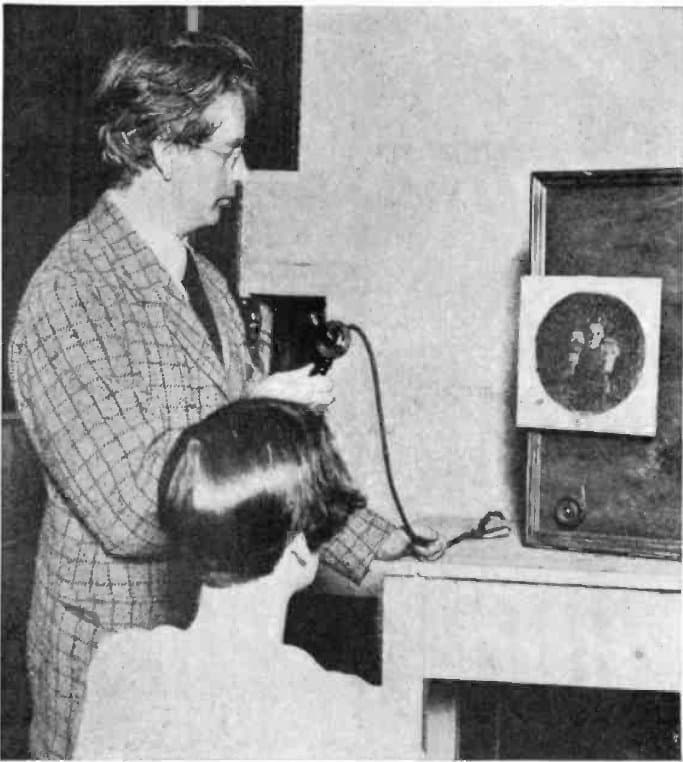
On January 26, 1926, John Logie Baird demonstrated a working television system to invited observers, including members of the Royal Institution, in London.
The images were faint, small, and primitive by modern standards.
But the demonstration showed that a moving visual image could be converted into electrical signals and reconstructed at a receiving device.
Photography had captured images. Cinema had made them move. Radio had transmitted sound without physical media.
Television brought moving images and electronic transmission together.
The moment: A moving human face appeared on a screen somewhere other than where it was being captured.
The technology was crude. The implication was enormous.
Steve Jobs — The Macintosh (1984)
Plate 09 / Ref image
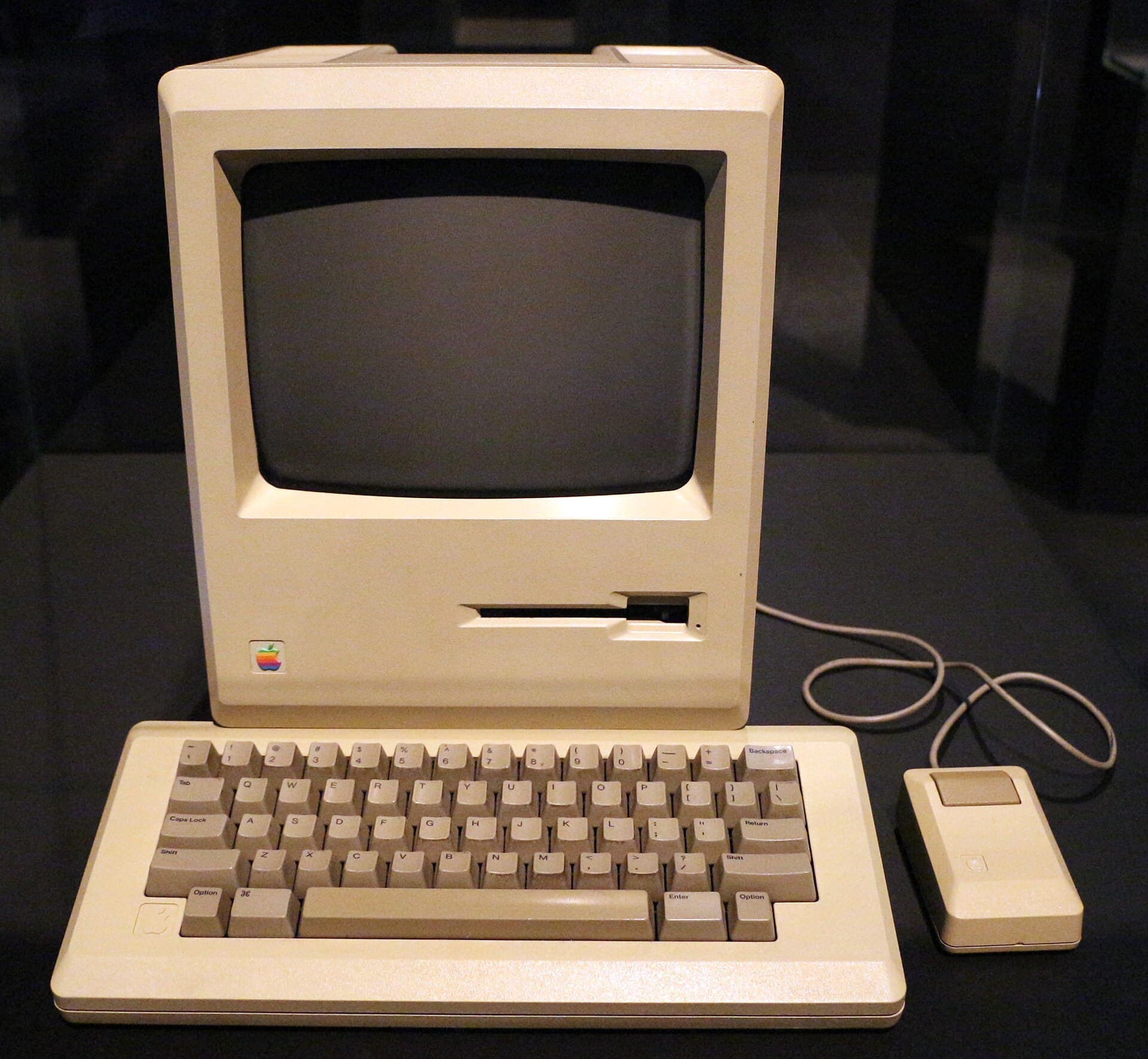
When Steve Jobs introduced the Macintosh in January 1984, personal computers were still intimidating to many potential users.
The Macintosh offered a different way to interact with a machine.
A mouse controlled a pointer. Information appeared inside windows. Menus could be selected visually. Text could appear in different fonts and sizes.
The computer even introduced itself with synthesized speech.
These ideas had important predecessors at Xerox PARC and in Engelbart's research. Apple's breakthrough was turning them into an integrated consumer product and presenting them in a way people could immediately understand.
The moment: The computer spoke, displayed graphics, and responded to a human pointing at the screen.
The Macintosh demonstration helped shift the public imagination from computers as specialist tools toward computers as personal companions.
Edwin Land — Polaroid Instant Photography (1947)
Plate 10 / Ref image
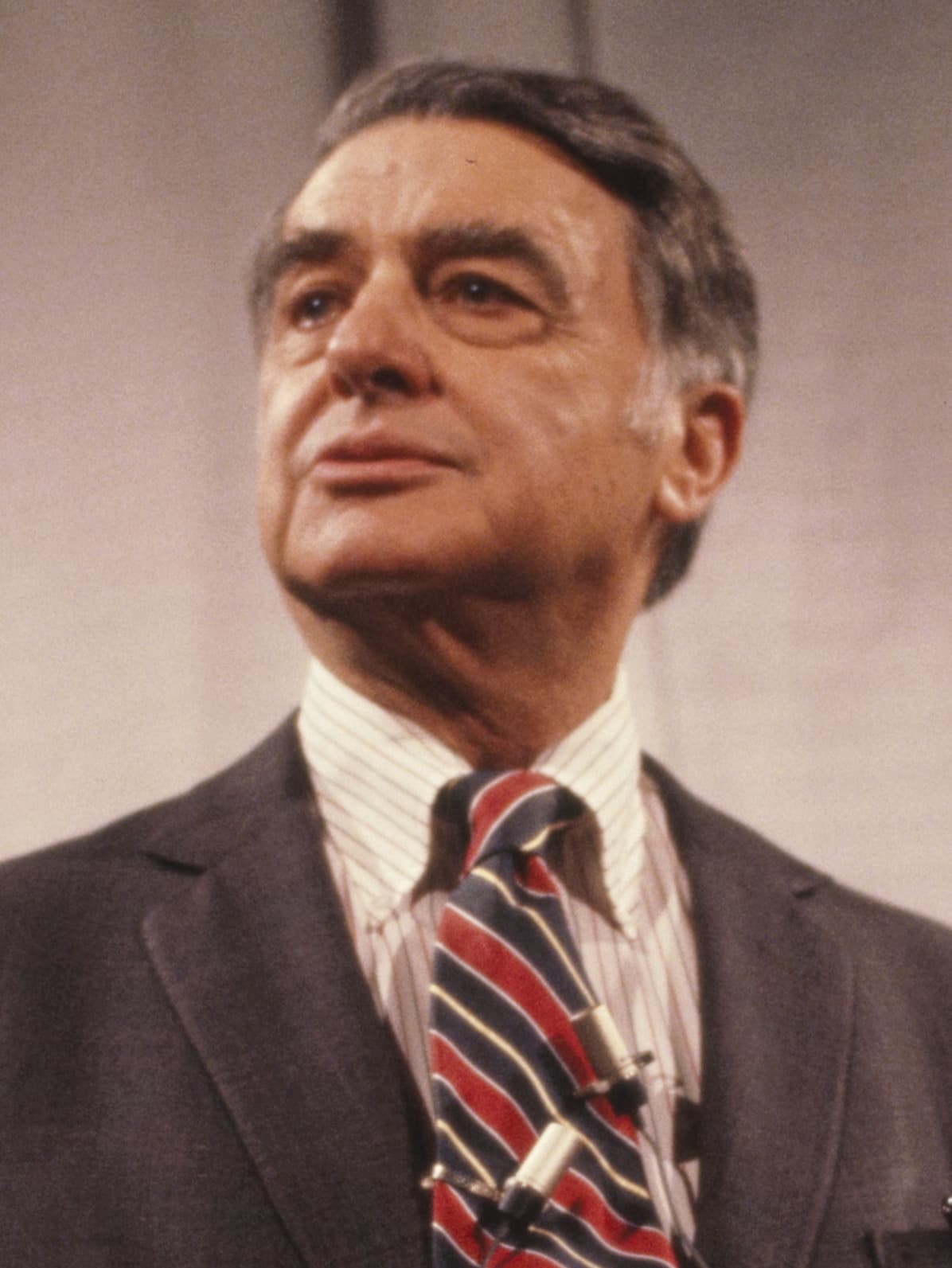
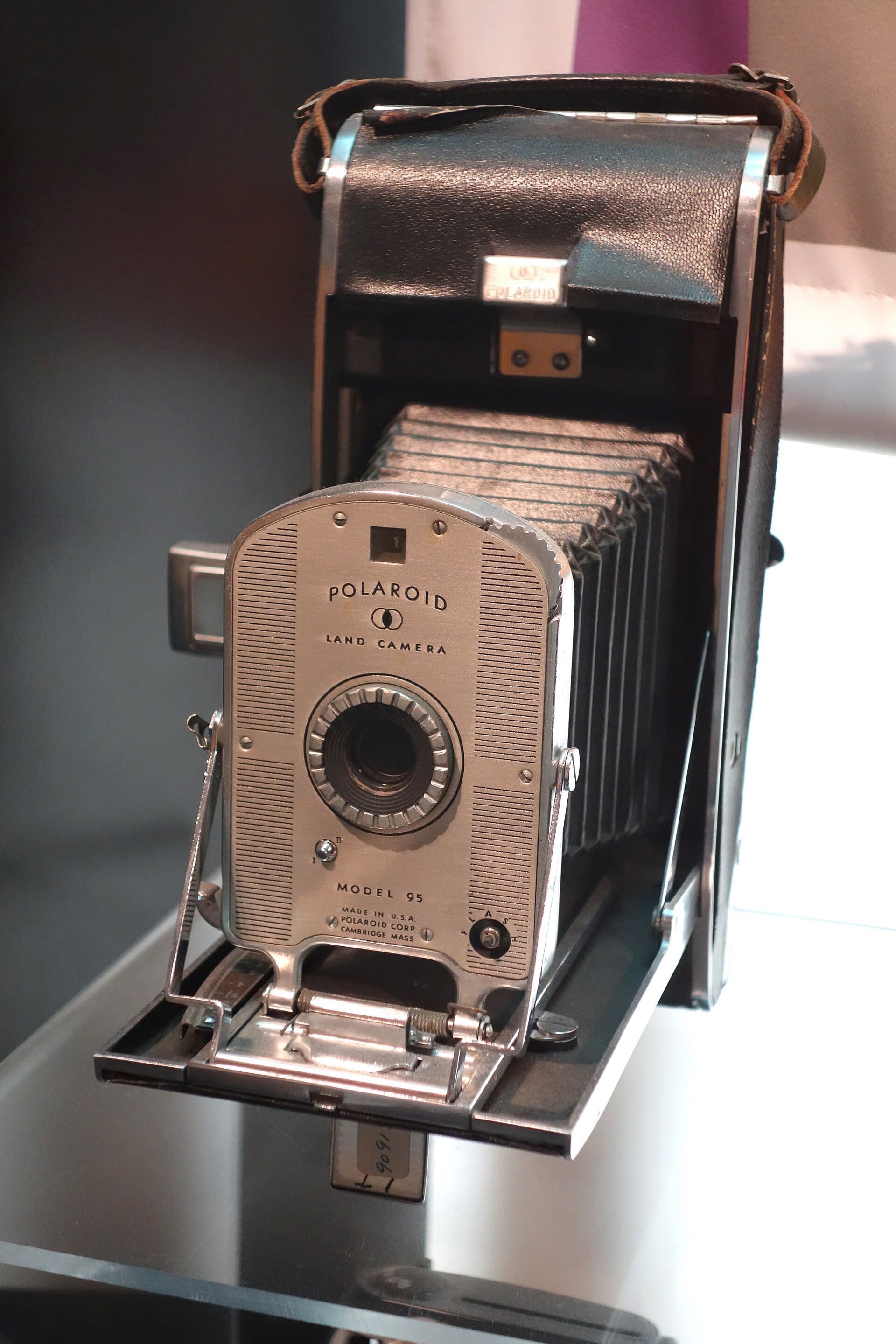
On February 21, 1947, Edwin Land introduced instant photography at a meeting of the Optical Society of America.
He had a photograph taken of himself in front of the audience.
Instead of sending the film away to be developed, Land waited about a minute and revealed the finished photograph.
It was a beautifully designed demonstration.
Everyone understood the old process: take a picture, develop the film, print the image, and eventually see the result.
Land compressed that entire process into a minute, in front of their eyes.
The moment: A photograph emerged almost immediately after it had been taken.
The Polaroid demonstration is one of the strongest examples of eliminating a familiar inconvenience so completely that the audience instantly understands the product.
Guglielmo Marconi — Wireless Telegraphy (1896)
Plate 11 / Ref image
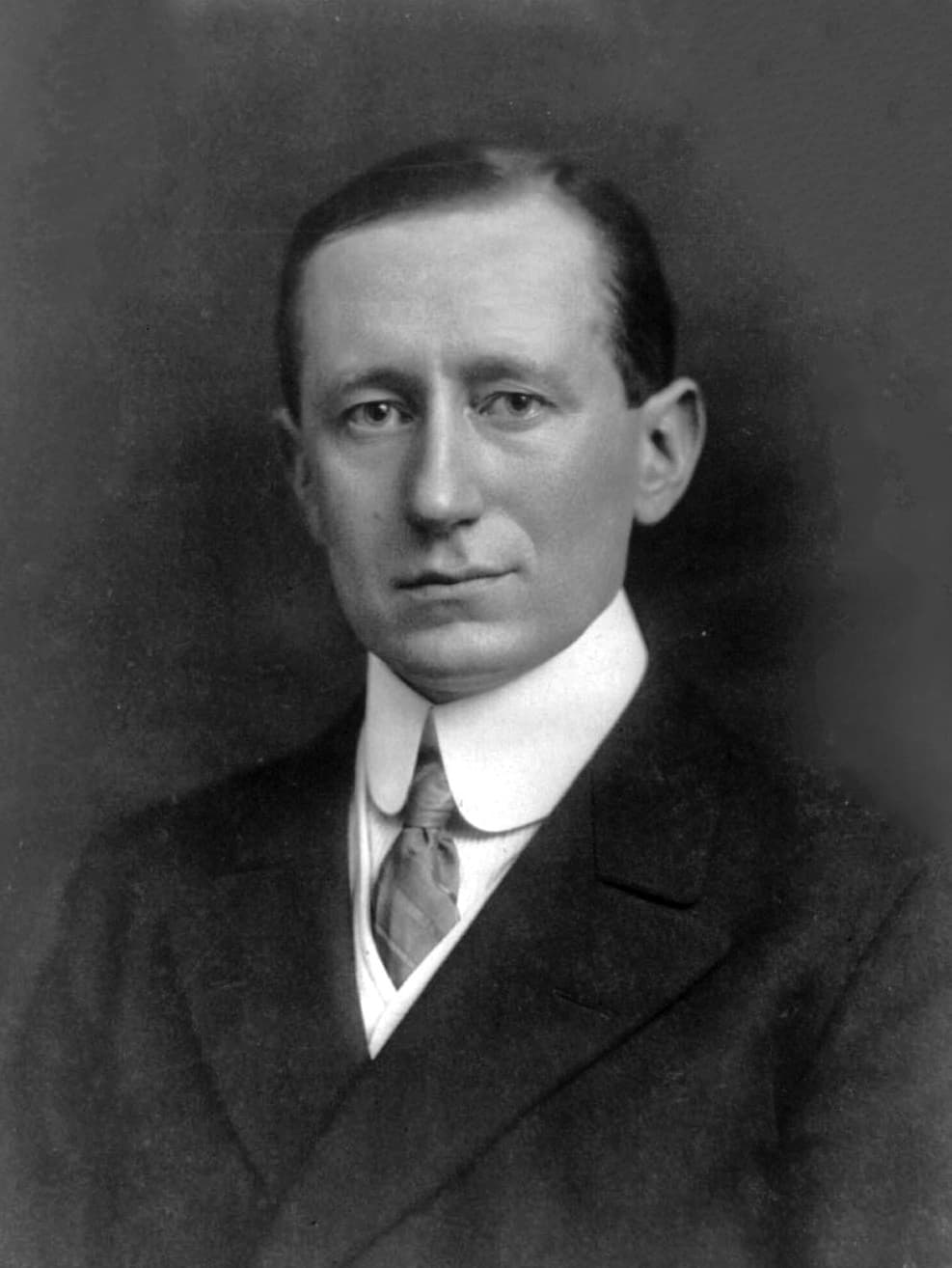
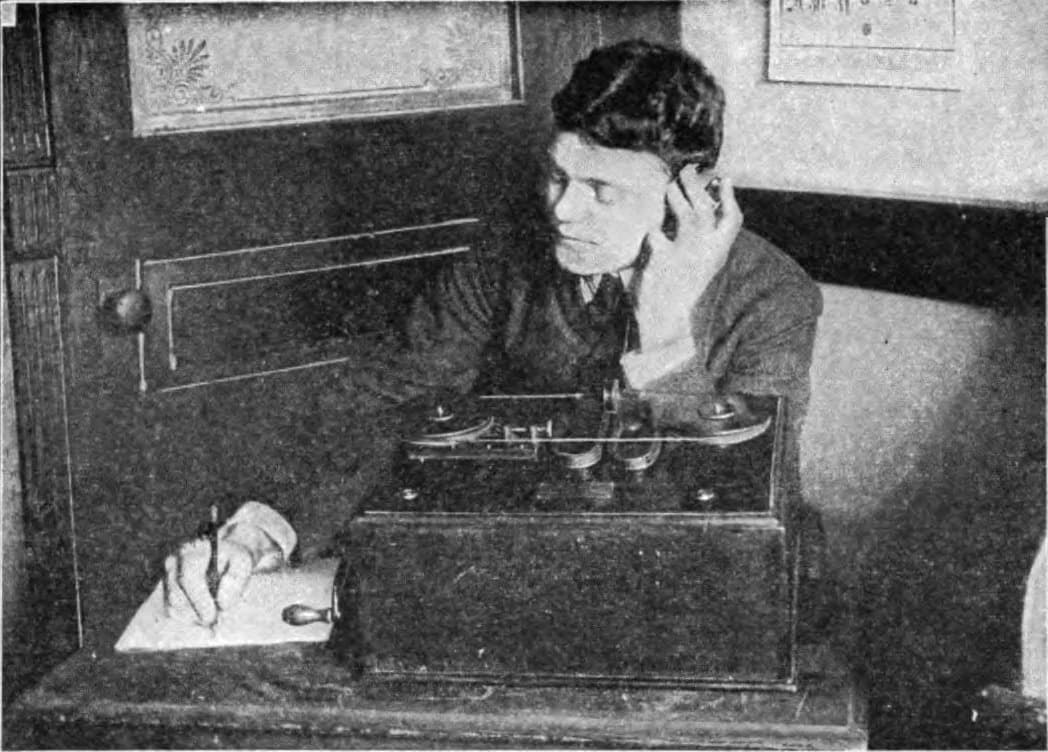
At a public demonstration in London in December 1896, Guglielmo Marconi showed that signals could travel without a connecting wire.
A transmitter produced electrical sparks, and a receiving device rang a bell elsewhere in the room.
There was no physical wire between them.
To an audience accustomed to telegraph wires stretching across landscapes and oceans, this was a remarkable possibility.
Communication could happen through the air itself.
The moment: A bell rang in response to a distant electrical signal, with no visible connection.
The demonstration pointed toward radio broadcasting, wireless communication, and ultimately the mobile networks we rely on today.
The Regency TR-1 — The Transistor Radio (1954)
Plate 12 / Ref image
The invention of the transistor in 1947 was an enormous scientific breakthrough.
But demonstrating that a small semiconductor could amplify an electrical signal wasn't especially exciting to an ordinary person. Vacuum tubes could already amplify signals.
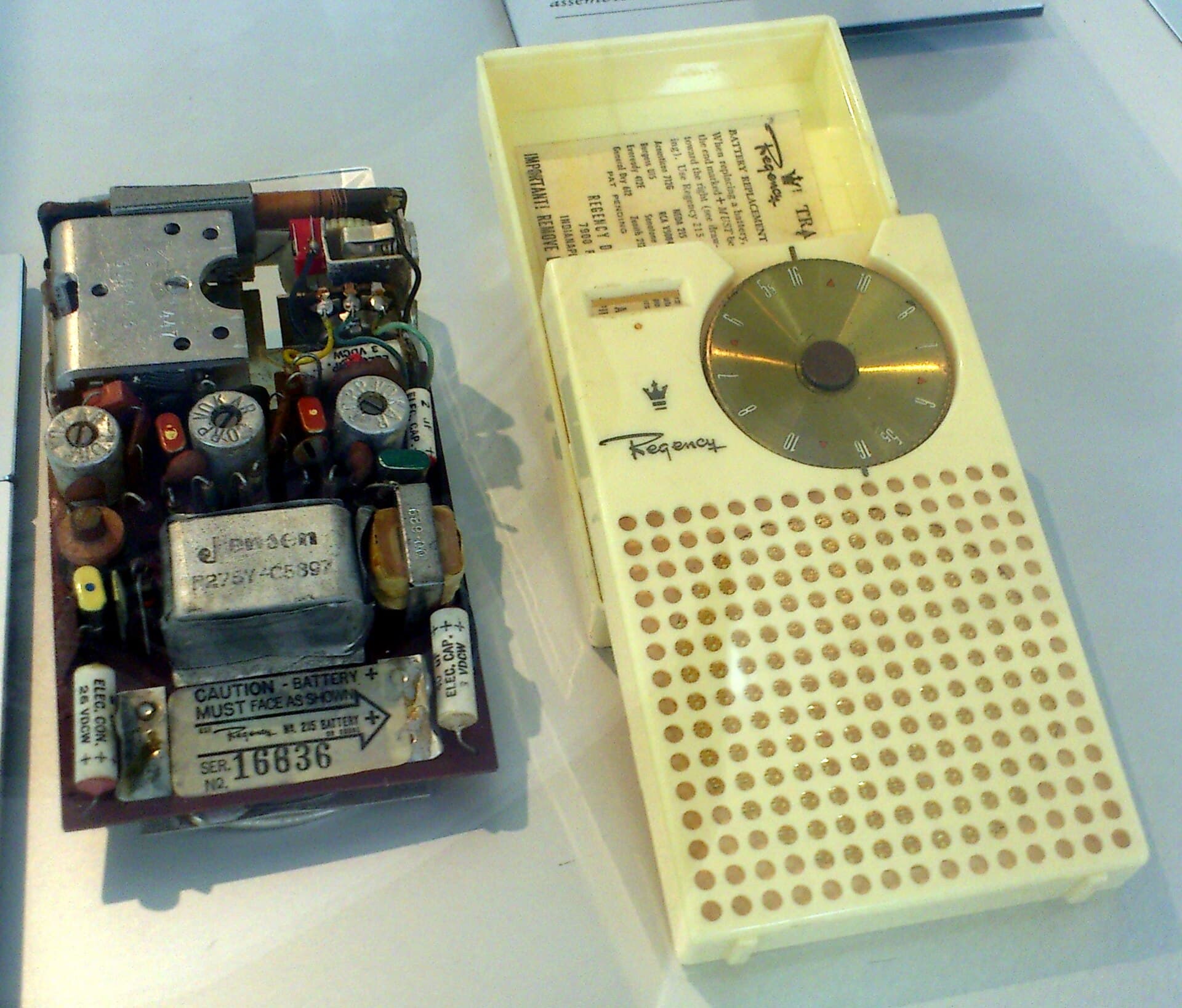
The Regency TR-1 transistor radio made the significance of the invention tangible.
Introduced in 1954, it was one of the first commercially available transistor radios.
A functional radio could now fit into a pocket rather than occupy furniture-sized space or require bulky batteries.
The moment: A radio that could be carried almost anywhere.
The transistor became important not because consumers understood semiconductor physics, but because they could finally see what miniaturization made possible.
Sony — The Walkman Press Demonstration (1979)
Sony's introduction of the Walkman is one of the most underrated product demonstrations in history.
Instead of gathering journalists in a room to explain the features of a portable cassette player, Sony handed reporters Walkmans and put them on a bus.
The journalists were taken to a park, where they were instructed to press Play.
As they listened through their headphones, music and an explanation of the product began playing. People wearing Walkman shirts moved and jogged around the park.
Sony wasn't merely describing portable music.
It was creating the experience of having a personal soundtrack while moving through the world.
The moment: Reporters discovered they could listen to their own music while walking around.
The demonstration made an entirely new behavior understandable by having the audience perform it themselves.
Interestingly, the initial press reaction was underwhelming. The eventual cultural impact was anything but.
NCSA Mosaic — Graphical Web Browsing (1993)
Plate 14 / Ref image
In the early 1990s, the Internet was powerful but not especially approachable.
Using networked information often required knowing specialized commands, addresses, or software.
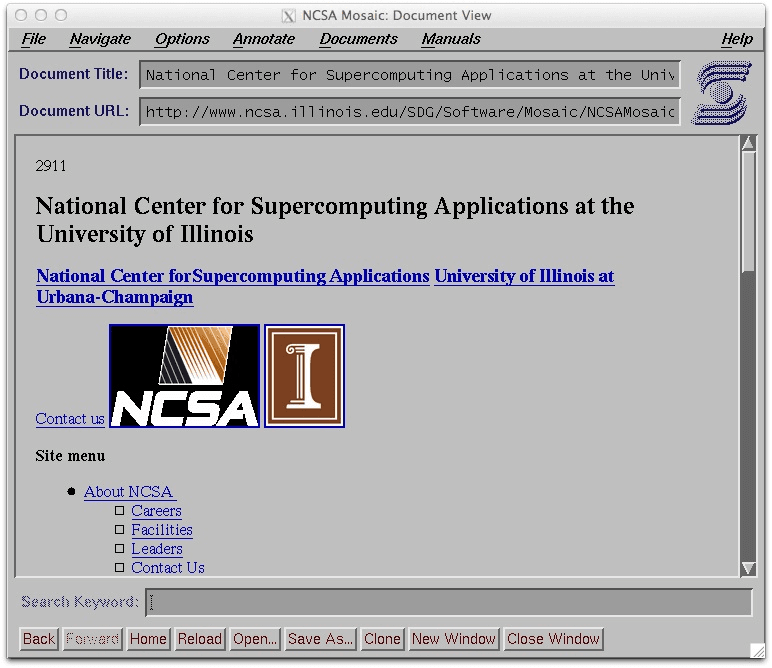
NCSA Mosaic helped transform that experience.
Its graphical interface, hyperlinks, and inline images made browsing the World Wide Web something visually understandable.
Instead of typing complicated commands, users could click on information, move between pages, and explore connected documents.
The moment: The Internet became something people could browse rather than merely operate.
Mosaic helped reveal the web as a medium for everyone, not just technically sophisticated users.
Google Search — Early Product Demonstrations (1998–1999)
Plate 15 / Ref image

Some products require elaborate demonstrations.
Others become obvious through a simple comparison.
Early Google Search belonged to the second category.
Enter a query into an established search engine, then enter the same query into Google.
When Google returned more relevant results, the difference was immediately apparent.
Google's PageRank technology was important, but its technical architecture didn't need to be explained for users to understand the value.
The moment: A search engine appeared to understand what you were looking for.
Unlike many other entries here, Google doesn't have one universally recognized, theatrical unveiling that defines its place in history. Its landmark demonstration was the product experience itself, repeated millions of times.
Steve Jobs — The iPod (2001)
Plate 16 / Ref image
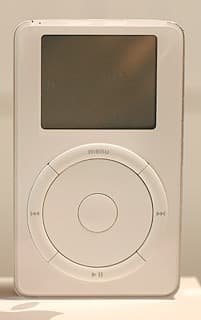
When Steve Jobs introduced the iPod in October 2001, portable digital music players already existed.
Apple's innovation wasn't simply inventing a device that played MP3 files.
It was making a digital music collection feel effortless, portable, and desirable.
Jobs condensed the product's benefit into a single memorable promise:
1,000 songs in your pocket.
No explanation of hard-drive technology or compression algorithms was necessary.
The audience understood immediately.
The moment: An entire music collection could fit in the palm of your hand.
The iPod demonstrated an important principle: a product doesn't need to be the first of its kind to deliver a revolutionary demonstration.
Sometimes the breakthrough is making the possibility simple enough for everyone to understand.
Tesla — The Original Roadster (2006)
Plate 17 / Ref image
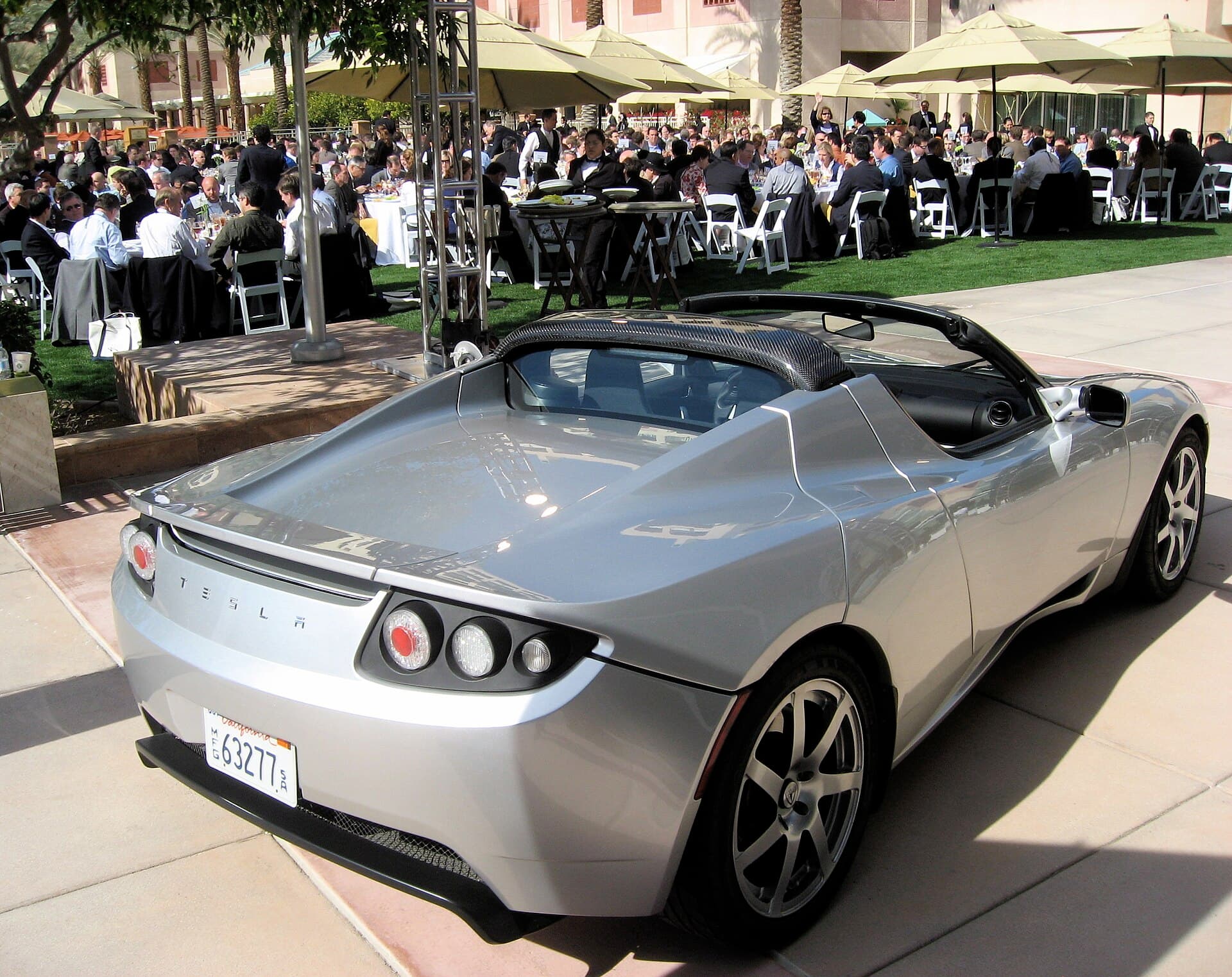
Before Tesla, electric cars were commonly associated with compromise.
They were often perceived as slow, unattractive, short-range vehicles for people willing to sacrifice performance for environmental reasons.
Tesla's original Roadster challenged that assumption.
It looked like a sports car. It accelerated like a sports car. And it ran entirely on electricity.
The 2006 unveiling and subsequent driving experiences were powerful because acceleration is something drivers and passengers can feel directly.
The moment: An electric vehicle delivered the excitement of a high-performance sports car.
The demonstration didn't need to explain battery chemistry or motor efficiency.
It simply showed that electric cars could be desirable.
SpaceX — Falcon 9 Booster Landing (2015)
Plate 18 / Ref image
For decades, the standard operating model of orbital rockets was to discard major hardware after each launch.
SpaceX wanted to change that.
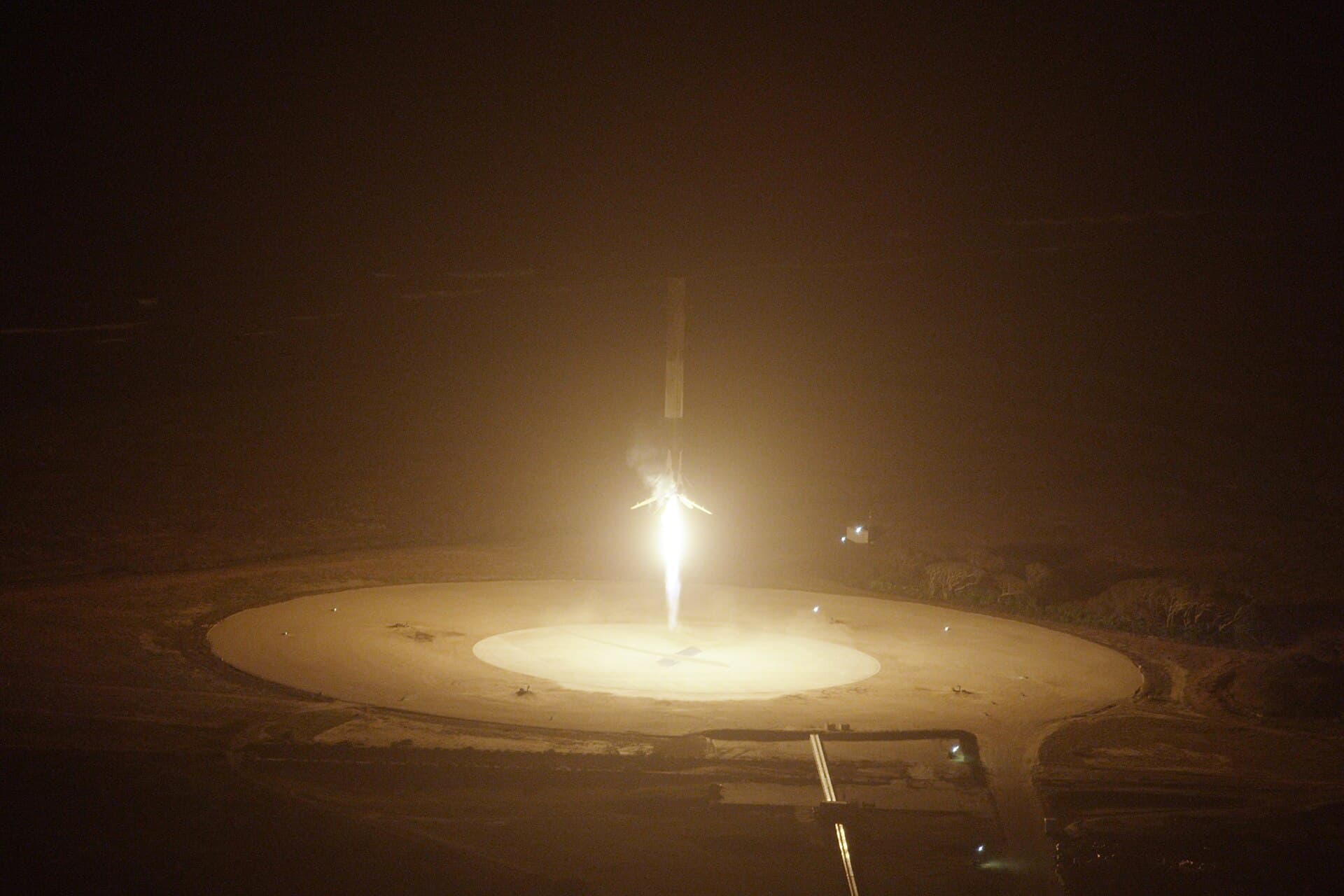
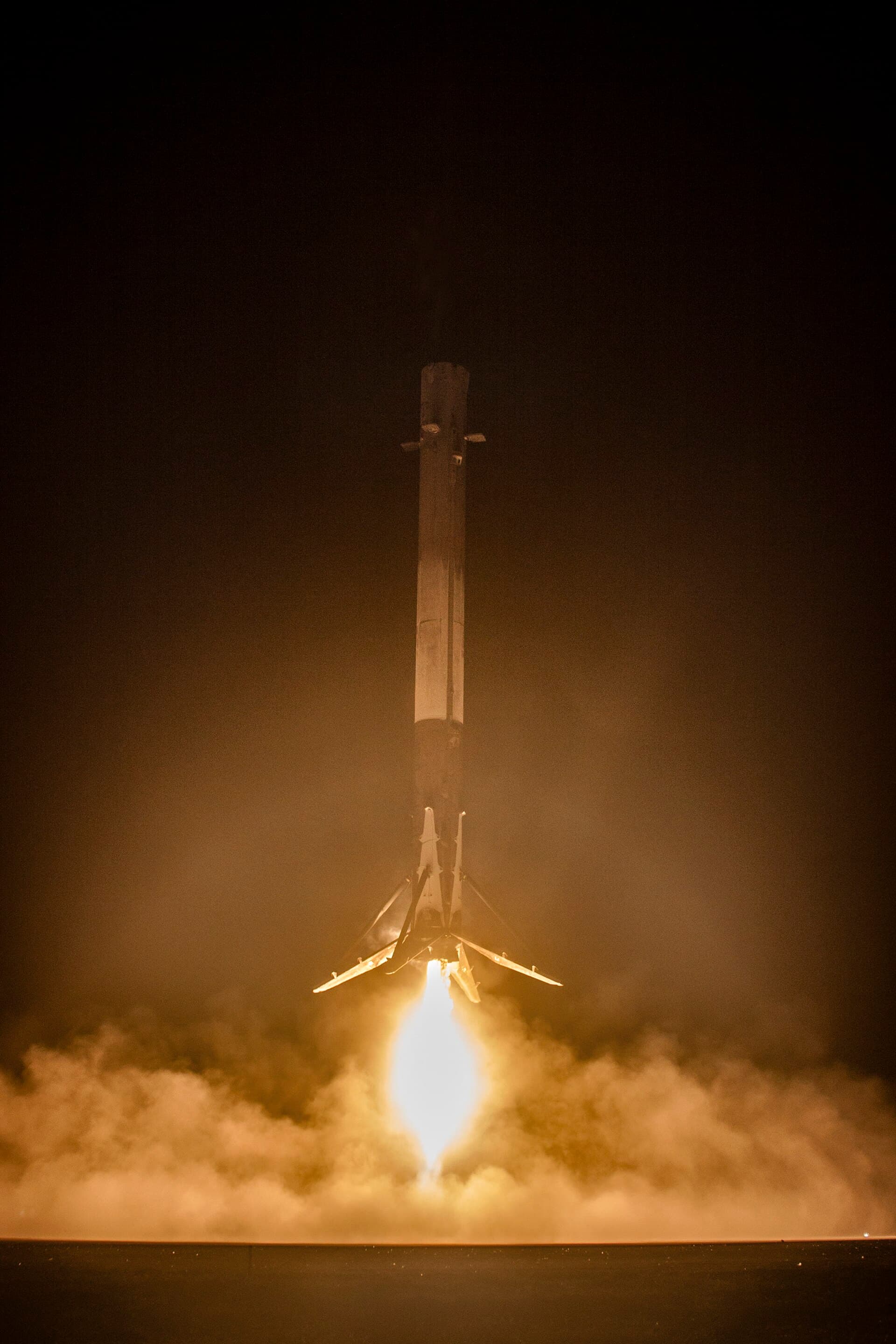
On December 21, 2015, after delivering the upper stage of its mission toward orbit, a Falcon 9 first-stage booster returned to Earth and landed upright.
The demonstration was extraordinary because it made a complex engineering claim visually obvious.
A rocket launched, separated, descended, and landed vertically under its own power.
The moment: A rocket returned from a space-launch mission and landed like a machine intended to fly again.
It was one of those rare demonstrations where the engineering achievement and the spectacle were the same thing.
OpenAI — ChatGPT (2022)
ChatGPT introduced an unusual model of product demonstration.
Rather than relying primarily on a keynote, a commercial, or a carefully controlled presentation, OpenAI gave the public access to a conversational AI system.
People began trying it themselves.
They asked it to write emails, explain difficult concepts, generate code, brainstorm ideas, and answer questions.
The demonstration was personalized.
One person might be astonished by its ability to write a poem. Another by its ability to explain computer programming. Another by how quickly it could produce a useful first draft.
The moment: People typed ordinary language into a computer and received unexpectedly capable responses.
ChatGPT showed that the strongest demonstration of a flexible product might be letting the customer discover their own use case.
Dean Kamen — The Segway (2001)
Plate 20 / Ref image
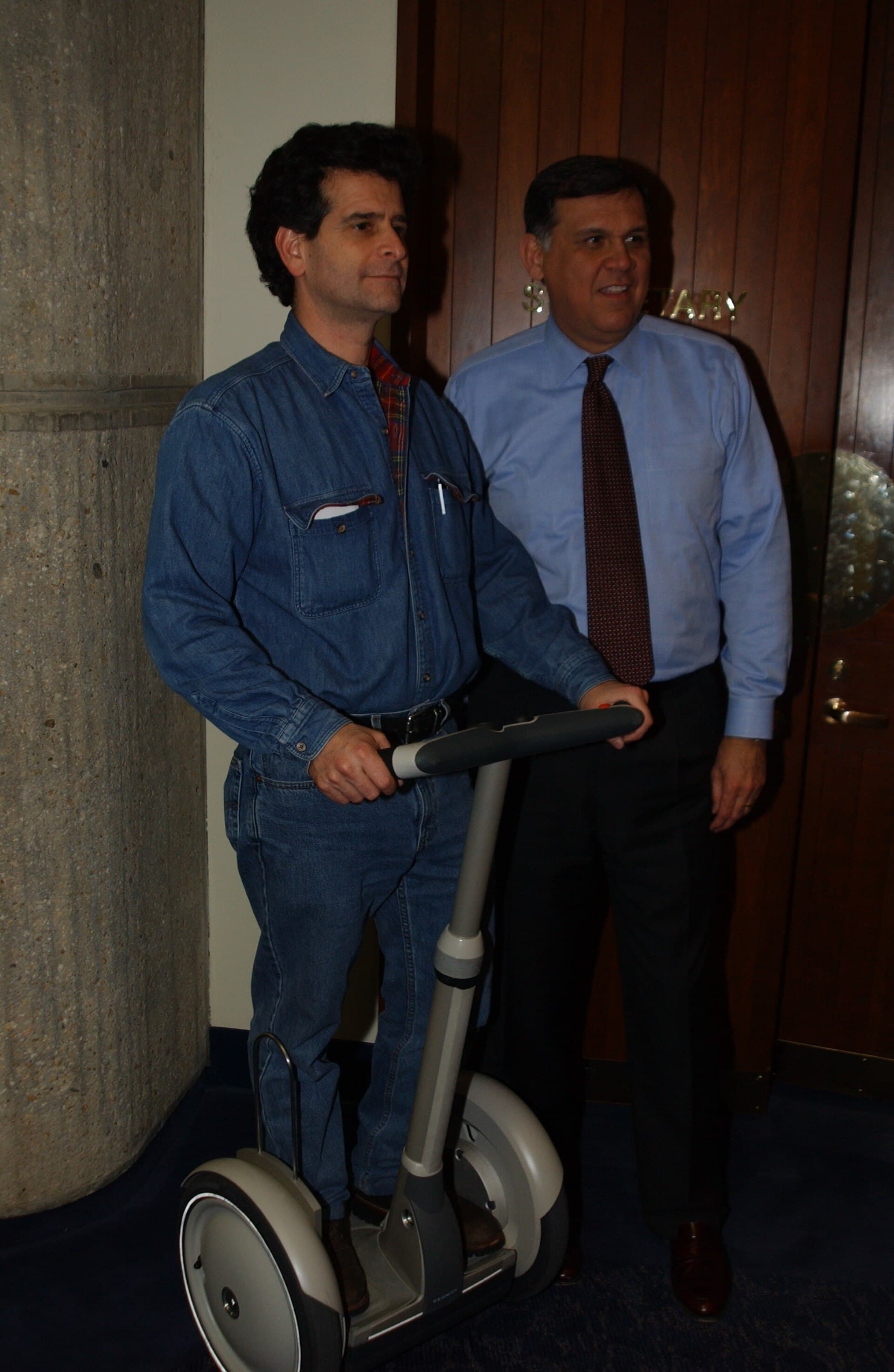


The Segway did not transform transportation to the extent many initially predicted.
But as a demonstration, it was remarkable.
A rider stepped onto a two-wheeled platform that appeared as though it should immediately tip forward or backward.
Instead, the device balanced itself.
The rider could move simply by shifting their weight.
There was no need for extensive explanation of gyroscopes, sensors, or balancing algorithms.
The moment: A two-wheeled machine stood upright and moved intuitively with its rider.
The Segway is a useful reminder that a spectacular product demo does not guarantee a spectacular business.
Tesla — The Next-Generation Roadster Takes Flight (2026)
On October 15, 2026, Tesla unveiled a next-generation Roadster prototype at a SpaceX test facility in Texas.
The demonstration seemed almost designed for an era when extraordinary videos are routinely dismissed as AI-generated.
The Roadster drove up a steep, curved ramp and held itself upside down using an underbody suction system. It then performed dramatic airborne maneuvers using cold-gas thrusters, including an assisted flip and a jump over other Tesla vehicles.
Tesla also demonstrated extraordinary acceleration, reporting a zero-to-60-mph time of less than one second.
Audience recordings corroborated that the stunts were real.
The demonstration did not prove that practical, sustained flying cars are ready for public roads. The prototype showed short, controlled airborne maneuvers, and the technology remains far from ordinary consumer deployment.
But that distinction doesn't diminish the spectacle.
The moment: A car performed maneuvers that looked so implausible that viewers questioned whether the footage was real.
It is too early to know whether the 2026 Roadster will become a commercially significant product.
As a demonstration of experimental automotive engineering, however, it deserves a place in the conversation.
What the Greatest Product Demos Have in Common
Across 150 years of technological history, these demonstrations reveal several recurring principles.
01
The best demonstrations make the impossible visible
Bell didn't need to explain telecommunications theory. People heard a voice through a wire.
The Wright brothers didn't need to debate whether powered flight was possible. They flew.
SpaceX didn't need to persuade people that a rocket could return to Earth. It landed one.
Proof is more powerful than promises.
02
The most memorable demonstrations show a transformation
Edison's lamps transformed darkness into light.
Land's camera transformed a photograph that required development into an image available almost immediately.
Google transformed an overwhelming collection of web pages into useful answers.
Great demonstrations make the audience experience the difference between the old world and the new one.
03
The product should do most of the talking
The telephone, phonograph, Walkman, Polaroid camera, and Segway all communicated their value through direct experience.
Their inventors didn't need complicated slide decks.
A brief explanation followed by a working demonstration was enough.
04
A good demo makes the audience imagine themselves using the product
The Walkman press event was powerful because journalists weren't merely watching someone else use the device.
They were using it themselves.
The same principle helps explain the extraordinary reception of ChatGPT.
People didn't have to imagine what it would be like to have access to conversational AI.
They could simply try it.
05
A great demo isn't necessarily a great business
The Segway was an extraordinary technological demonstration, yet its commercial impact fell far short of early expectations.
Conversely, the transistor's first demonstrations weren't particularly impressive to general audiences, despite the invention's enormous historical consequences.
Demonstration quality and commercial success are related, but they are not the same thing.
06
The strongest demos are built around one unforgettable moment
For all the technical complexity behind these inventions, their demonstrations can often be reduced to a single sentence.
- The telephone transmitted a human voice.
- The electric light replaced flame.
- The airplane flew.
- The phonograph remembered sound.
- The camera produced a picture in a minute.
- The Walkman made music mobile.
- The iPhone responded to fingers.
- The rocket came back and landed.
- The computer understood ordinary language.
That simplicity is not an accident.
It is the genius of the demonstration.
Show the Future, Don't Explain It
There are many ways to introduce a product.
You can describe its features, explain its engineering, present market research, or make predictions about the future.
But the demonstrations that endure in history do something more compelling.
They let people witness the future for themselves.
The Wright brothers made the question of powered flight irrelevant by flying. Edwin Land eliminated the need to explain instant photography by producing a photograph. Steve Jobs showed the power of multi-touch by manipulating a screen with his fingers.
The best product demos create a moment when the audience stops asking whether something is possible and starts wondering what the world will look like now that it is.
A great product demo doesn't just show what a product does. It changes what people expect the world to do next.